2026: Dissent
‘Joy is an act of resistance’
Toi Derricotte from the poem, The Telly Cycle
Throughout 2026, Lancaster Arts will explore the theme of Dissent following on from Land in 2025. We could not imagine a more apt and relevant theme. The annual themes for Lancaster Arts arise out of conversations; with artists, and noticing the themes underpinning the work being created, conversations with a wide range of people from academics at Lancaster University and audiences, to serendipitous conversations in the street. And importantly, seeing what is happening in the world around us. We will build on the themes that have arisen through 2025’s exploration of Land, especially where these overlap with ideas of dissent.
The Oxford English Dictionary defines dissent as a difference in opinion or a disagreement, particularly when this differs from a prevailing view. In the maelstrom of change as we enter 2026, it feels overwhelming.
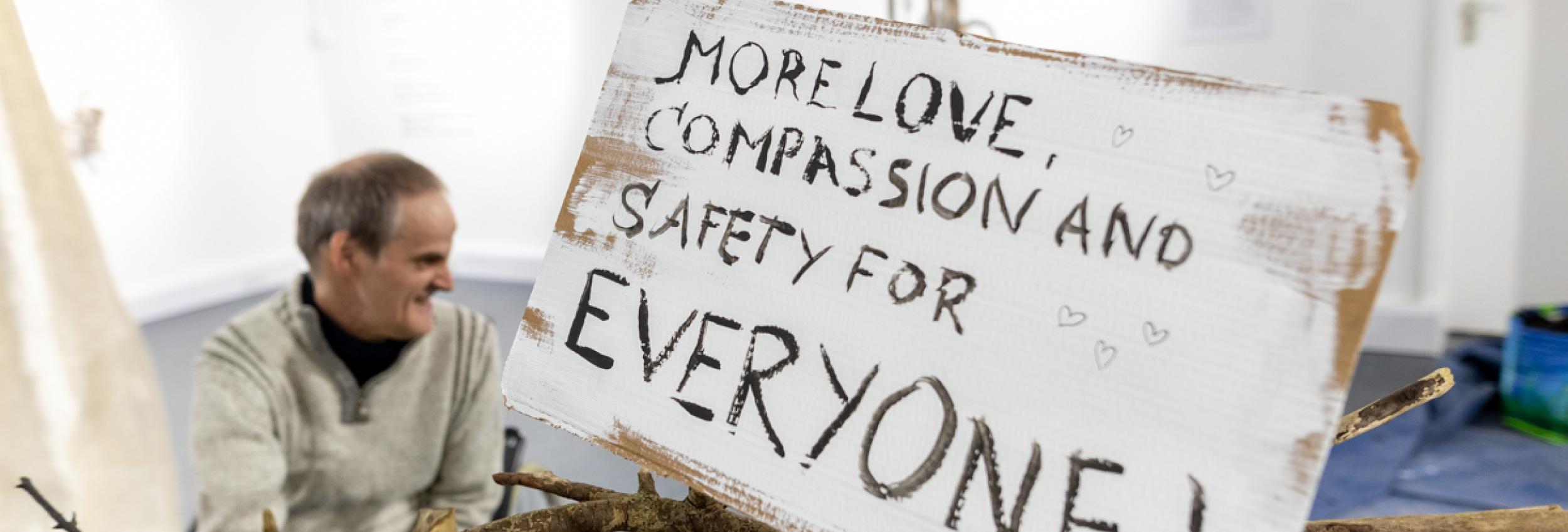
Dissent is a fundamental form of resistance, one that is manifested in a wide range of ways that also include indirect forms of resistance, such as silence or song. In the large protest events, singing and dancing play an increasing part. We witness these more artful forms of resistance on our TV screens from Minneapolis and Iran as we write at the beginning of this year. We often oversimplify the meaning of dissent to protest or violence rather than disagreement or the small everyday acts of non-conformity – something we all do. Dissent is also active engagement, a questioning of the status quo, a provocation against injustices and a potential way forward.
Art has a hugely significant part to play in times like this, uncovering what we may not have heard, seen or felt already. What it doesn’t do is tell us what is right or what we must do, even if we want it to. It can be uniquely powerful in its ability to hold opposing ideas at the same time. Sharing a live arts experience can also focus our attention on discovering what we have in common. Our programme will explore dissent through performance, visual art and music and underpins all of our commissions and events throughout the year. You will not see a single lens or artwork that presents dogma or answers but instead is playful, humorous and provokes curiosity and surprise. Dissent is also about flipping expectations – sometimes it is about content and sometimes dissent is within form, often both.
Throughout our programme we are asking questions such as these: How do we dissent in our lives? Is art itself a form of dissent? What is the role of joy in undermining violence or authoritarianism? Is dissent only informed by anger? If we see dissent as differing from the prevailing view, what is the prevailing view? Is it always what we or the media assume, or could it be surprising?
If you are interested in exploring these questions with us or asking new ones or helping us consider what theme would work for 2027, come along to a performance in the theatre or concert or exhibition. You can also join our mailing list to find out about events not in our brochure or check out our regular artist opportunities. Drop us a line. We will be asking you for your thoughts and questions on this theme throughout the year. We’d love you to join the conversation.
“The sharing of joy, whether physical, emotional, psychic, or intellectual, forms a bridge between the sharers, which can be the basis for understanding much of what is not shared between them, and lessens the threat of their difference.”
Audre Lorde