BALANCE: Holding Uncertainty
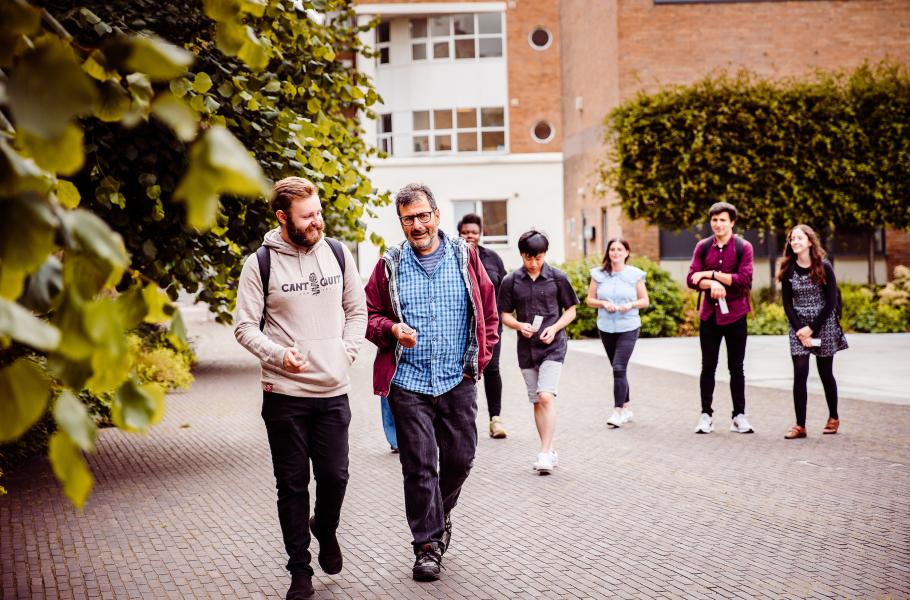
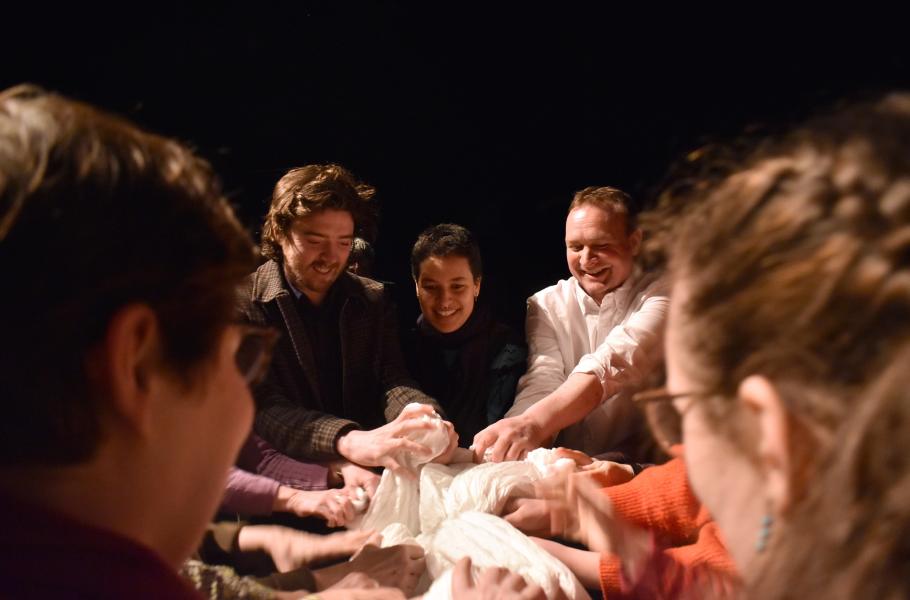
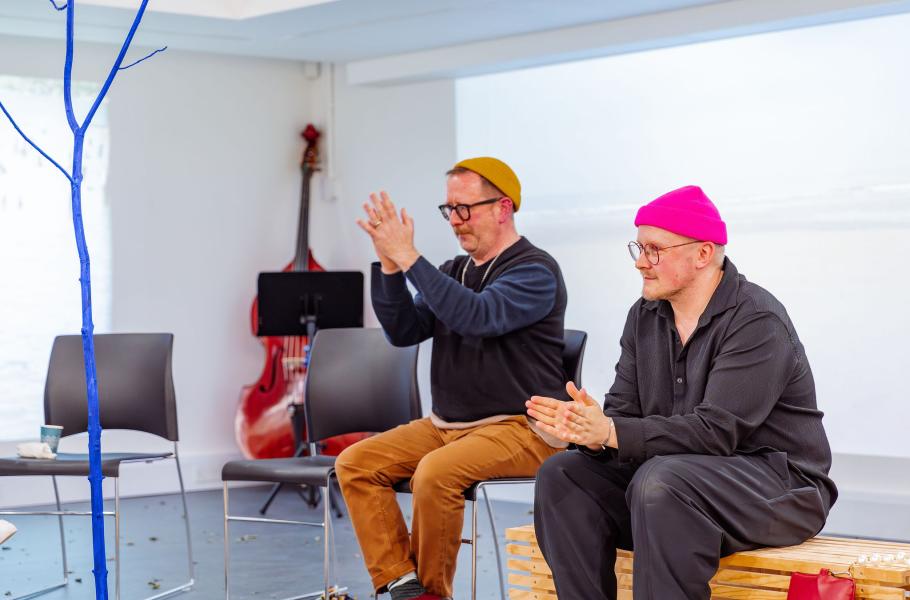
In early 2026, Lancaster Arts commissioned BALANCE by Adam York Gregory and Gillian Jane Lees, a project that included a six-hour durational performance alongside a residency. While the live performance formed a key moment in the project, BALANCE was developed over a longer period of research and making. During the residency, Adam and Gillian cast the concrete on site and spent time preparing materials in the gallery, while also meeting with local people outside the institution, through arranged conversations and chance encounters, to talk about experiences of work and its toll on the body. These activities informed the live performance, which was later encountered both as a durational event and as a post-performance installation. What follows is written in response to conversations with the artists, and to witnessing the work in both live and installed forms.
Alice Booth, Producer at Lancaster Arts, has written the following blog in response to the residency and performance.
Durational performance can sound like an intimidating term. At its simplest, it describes work that unfolds over a long stretch of time, where time itself becomes the material. Unlike theatre, nothing is edited down for clarity or comfort. Unlike spectacle, nothing rushes toward a conclusion. Artists such as Marina Abramović have used duration to ask what happens when we stay with something beyond the point of ease or reward, when attention becomes effort and effort becomes shared. BALANCE sits within this lineage, but its language is quieter, more grounded, and closer to everyday labour.
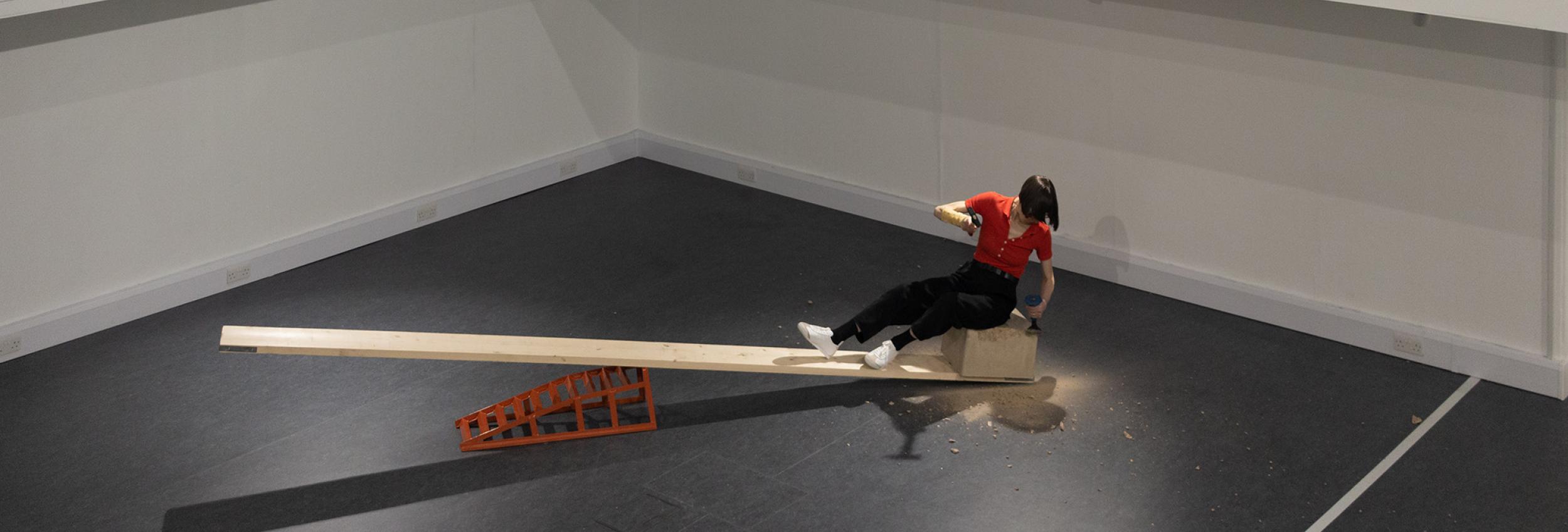
The set up for the durational performance was stark. A plank, a pivot, and a concrete block, with Gillian’s body positioned as counterweight. The structure suggested the possibility of balance, but never guaranteed it. This was not a neutral test of strength or stamina. Gillian lives with a degenerative condition, something the audience would not necessarily know, but which is fundamental to the work. BALANCE is an encounter between a body shaped by ongoing physical change and a resistant material, between careful calculation and lived unpredictability.
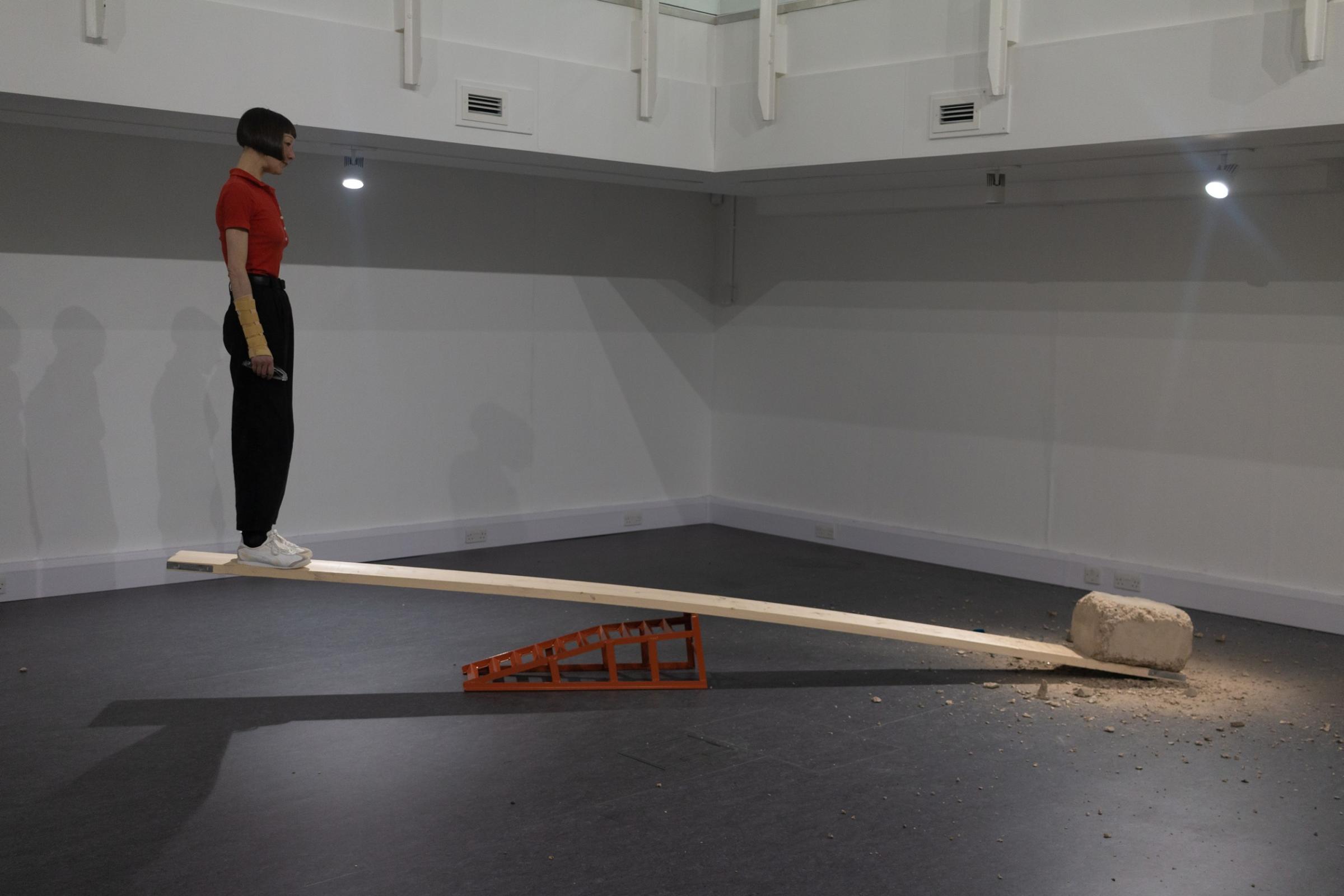
Adam and Gillian never rehearse. They do not test whether a work will succeed before inviting an audience to witness it. Instead, they calculate, measure, and design a system, and then carry it out live. The testing happens in the moment, under real conditions, with real consequence. In BALANCE, that test lasted six hours. That was the structure. There was no extension, no adjustment, no promise of resolution beyond that frame.
And the seesaw did not balance. Not even close. Gillian worked carefully and repeatedly, trying to meet the concrete block in equilibrium, but she failed. That failure is not incidental. It is the work. Throughout the performance, Gillian moved several times to the other end of the plank to test whether her weight might finally meet the block. Each time she did, the plank bent far more than expected. More than the artists expected. More than the audience expected. Each bend felt riskier than the last, the structure visibly under strain, the sense of precarity increasing rather than easing. Instead of edging toward balance, the system insisted on its refusal. Absolutely, resolutely, it would not level out.
Afterwards, people asked whether Gillian would continue. Whether she would return the next day, keep adjusting, persist until balance was achieved. But that was never the point. BALANCE does not reward persistence with success. It does not suggest that effort will eventually be met with resolution. Six hours, and then it ends.
What remains after the performance is the installation. Gillian and the tools are removed. The debris stays. Fragments of concrete, imbalance, and material traces of pressure and effort remain in the gallery. The body is absent, but its labour is everywhere. Audience attention shifts here from empathy to investigation. Without the live action, viewers reconstruct what happened through what is left behind. The concrete remains, along with an additional complete block made by the artists, will form part of the Lancaster University art collection, extending BALANCE beyond the live moment and into a longer institutional life. It is anticipated that this work will be installed on the campus.
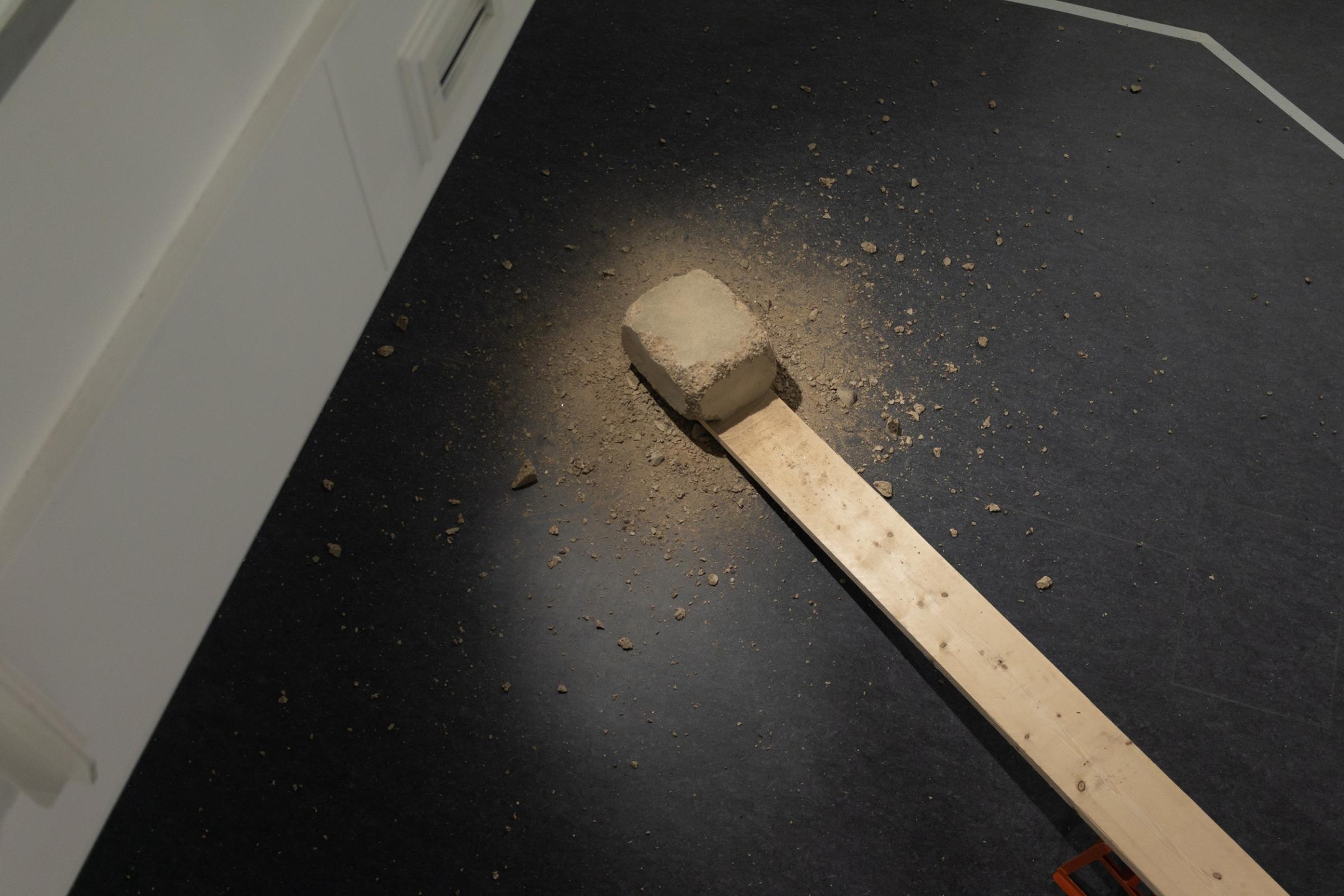
BALANCE is not closed. In future versions, Adam and Gillian will think about how balance might become achievable. The concrete block may be smaller. The aggregate may change. The calculations will shift. But uncertainty remains. The concrete could split. Gillian could fail again. She could also complete the task far earlier than expected. Risk does not disappear with refinement. BALANCE stays open, changing, alive.
What stayed with me most strongly, witnessing BALANCE, was the clarity of its refusal. This is a work that takes dissent seriously, not as protest or spectacle, but as something sustained and embodied. A refusal to pretend bodies are endlessly resilient. A refusal to tidy labour into narratives of progress. A refusal to offer relief where there is none. It asks us to sit with effort as it happens, without promise, without climax, without the comfort of things working out.
BALANCE marked one moment within Lancaster Arts’ wider programme on Dissent, which continues throughout the year. While this performance has now concluded, our programme continues to ask how art can sit with resistance, care, and discomfort rather than smoothing them away. You can find current and upcoming events across our exhibitions, performances, concerts, and talks via our What’s On pages, with more on Dissent unfolding into the autumn. We hope you will spend time with us, staying with the work, even when it does not resolve.